Unnecessary criticism of CDS appointment
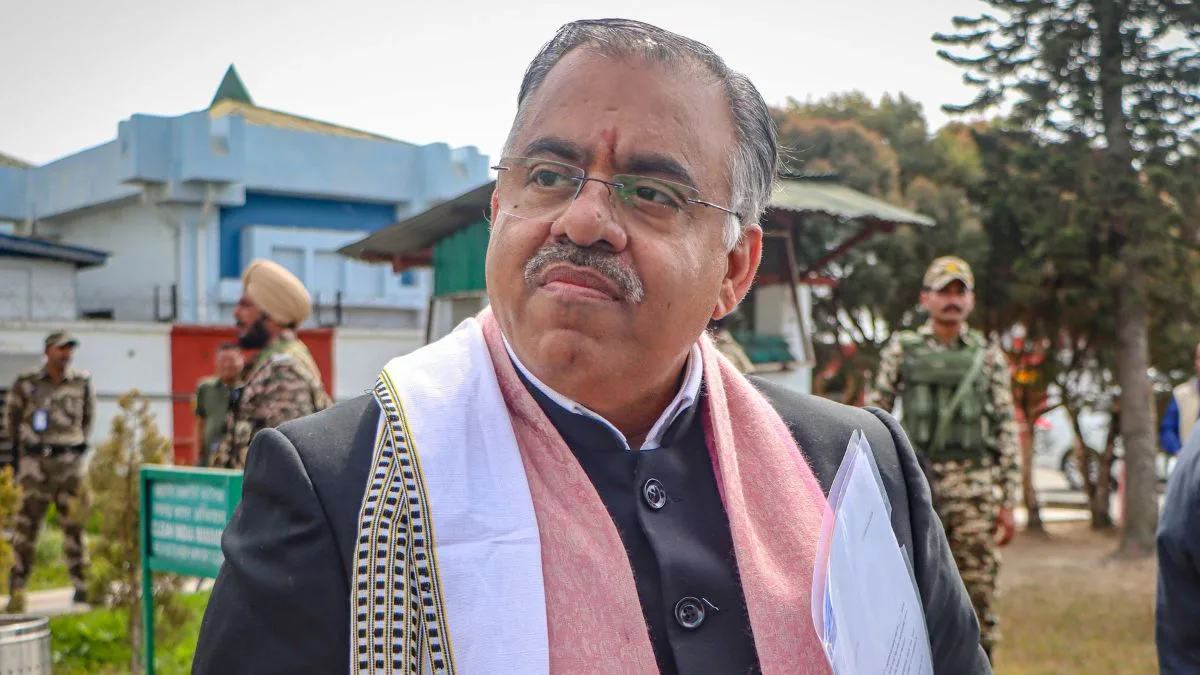
The appointment of Lt Gen Raja Subramani as the next CDS has drawn criticism from multiple quarters, though the logic in some cases is bizarre.
In his address, the CDS underscored the evolving nature of modern warfare, marked by convergence across kinetic and non-kinetic domains, which demands advanced and integrated technological solutions.





Photo: ANI
Aiming to synergise the Services–Academia research and development ecosystem for the creation of niche and futuristic technologies tailored for the Indian Armed Forces, the inaugural edition of the Tri-Services Academia Technology Symposium (T-SATS) commenced on Monday at the Manekshaw Centre, New Delhi.
The symposium, inaugurated by Chief of Defence Staff (CDS) General Anil Chauhan, witnessed participation from directors and heads of departments of leading academic and R&D institutions, along with students from 62 institutes including IISc, IITs, IIITs and private technology universities.
Advertisement
In his address, the CDS underscored the evolving nature of modern warfare, marked by convergence across kinetic and non-kinetic domains, which demands advanced and integrated technological solutions.
Advertisement
He emphasised the pivotal role of academia, startups and industry in building indigenous capabilities across platforms, weapons, networks and doctrines to meet future operational requirements.
He urged a whole-of-nation approach, calling on academia to scale innovation and help position India as a global leader in next-generation defence technologies.
General Chauhan also inaugurated a technology exhibition featuring 47 innovative projects from academic institutions. These exhibits, evaluated by subject-matter experts from the three Services, were assessed for their potential military applications. Promising projects will be considered for R&D collaboration and funding support in the future.
A key highlight of the day was a series of 108 structured one-on-one meetings between academic innovators and Service representatives. These closed-door sessions provided a platform for pitching R&D proposals, receiving strategic guidance, and shaping ideas into military-use cases, fostering a collaborative and outcome-oriented environment.
During the symposium, MoUs were also signed with several academic institutions including Ajeenkya DY Patil University, Gujarat National Law University, IIT Madras, Manipal Academy of Higher Education, MS Ramaiah University of Applied Sciences, Nirma University, Oriental Institute of Science and Technology, Rashtriya Raksha University, and the National Research Development Corporation.
Among the various brainstorming sessions, the seminar on ‘Overview of the Operational Conditions Including Present and Future Technology Needs of Services’ highlighted the blurring lines between conventional and non-conventional threats and the importance of mission-driven technological collaboration with academia.
Another session on ‘Understanding the R&D Ecosystem in Academia’ stressed the need for institutionalised, defence-focused research frameworks.
Advertisement